
A linear light changes how a wood ceiling is designed, detailed, and installed. We’ve created technical drawings of our ceiling systems, to give you more options when integrating lighting in your designs. Choose your fixtures and plan the opening all at one time.
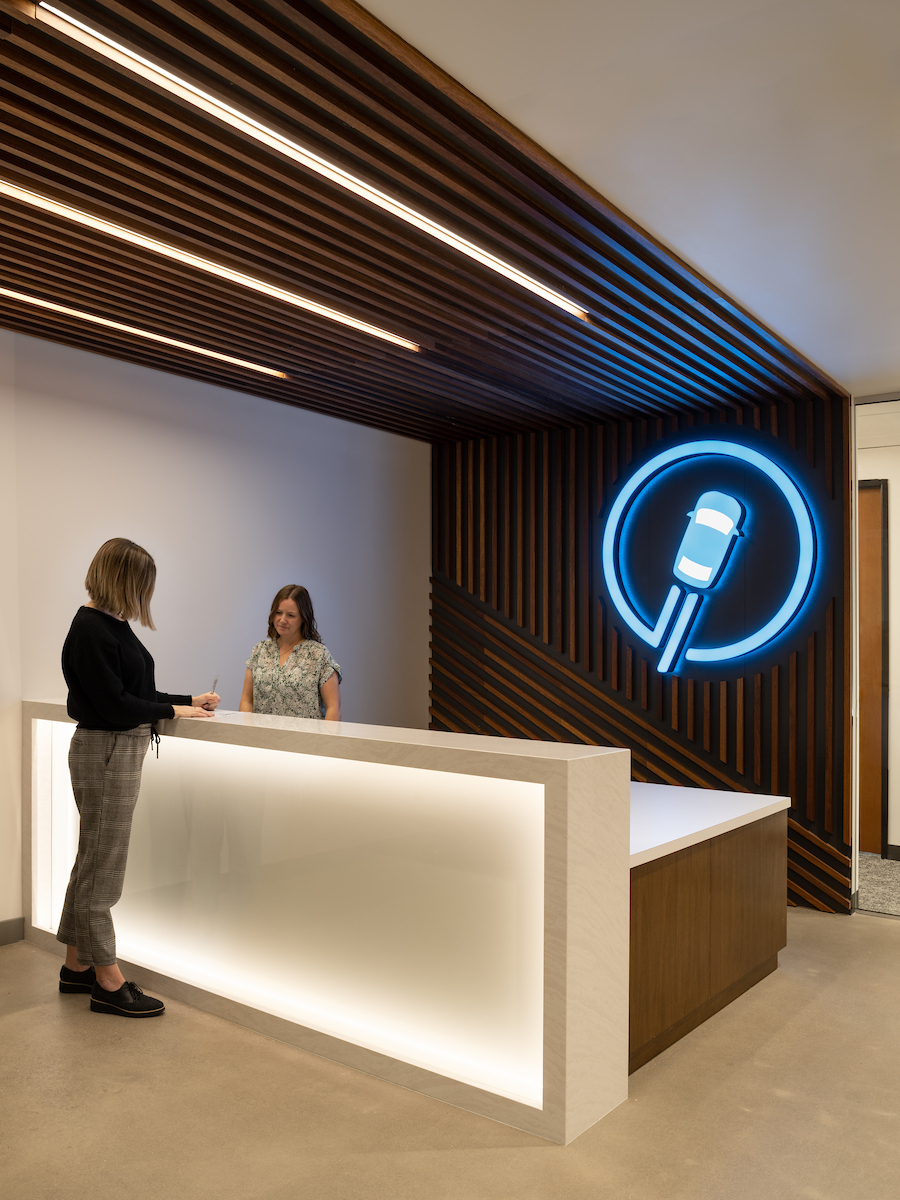
Lighting integration Guides are now available for our Acoustic Ceiling Tiles, Acoustic Ceiling Panels, and Modular Ceiling Panels. Each product group has its own installation guide and CAD details for a recessed linear fixture on a standard 15/16″ T-bar grid.
Note: All data based on compatibility with Axis Slate Lighting.
Don’t see your system, or need a width that isn’t detailed? Reach Out >>
FAQ
It’s designed for a standard 15/16″ T-bar. The details are based on heavy-duty 15/16″ main runners. Grid layout and spacing are confirmed for each project. Acoustic ceiling tiles may also require an added T-bar where a tile is cut.
From the grid, never from the wood. The fixture hangs from brackets on the T-bar main runners. The TerraMai panel or tile is fastened to the grid separately and carries no fixture load. Acoustic ceiling tiles also get safety cables.
Axis Slate, in 1″, 2″, 3″ and 5″ widths. Our details are built around Axis Slate linear fixtures. Other linear fixtures can be used, coordinated with the fixture manufacturer. Size every opening to the actual fixture housing, not the nominal width.
Yes, before they are installed. The opening is cut and the slats, rails and backer are reworked around it on the ground, then the panel or tile is installed. Each guide shows exactly how for that system. Modifications are made by the installer.
Yes, if it’s planned before the ceiling closes. Some TerraMai panels are fastened in place. Locate drivers and connections where they can be reached without removing the wood.
It can. Published acoustic data is for unmodified ceilings. A fixture opening, and changes to the insulation or backer around it, can change performance.
Yes, coordinated with the fixture manufacturer. Lay out module lengths, connectors and driver access against the panel or tile joints before anything is cut. Each fixture module is supported independently.
No. Our lighting integration details are general guidance for planning and coordination. Installation follows product’s installation guide, the fixture manufacturer’s instructions, and applicable codes. Fixtures, supports and electrical work should be performed by trained professionals.
We’re here to give you the details to keep your project moving.
Whether you’re looking for inspiration or detailed specifications, we’ve got you covered.
Reach out to our team for expert guidance.
